
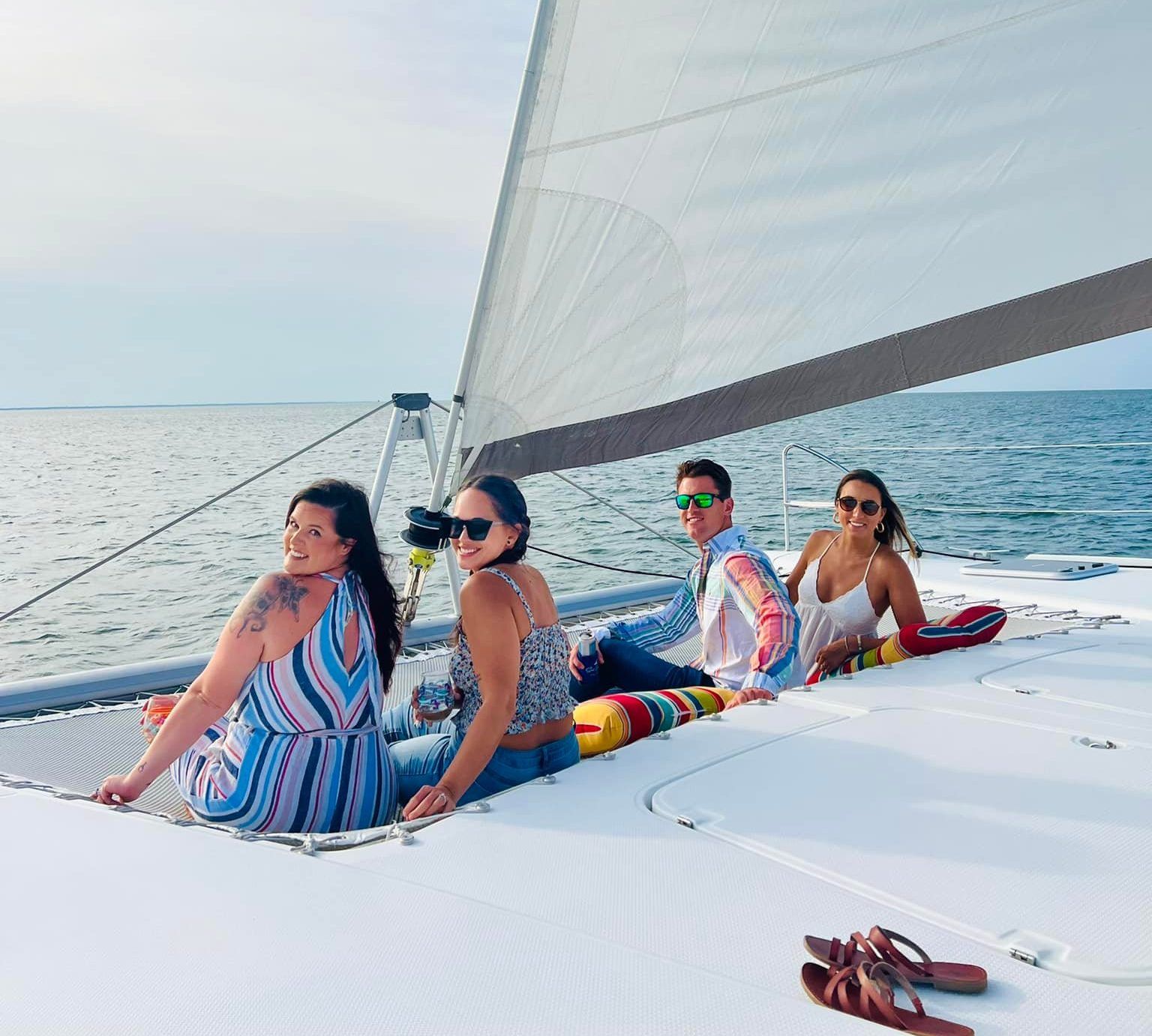
Both options put you on the same water aboard the same fleet. The difference is who is responsible for the vessel — and that changes a few practical details.
Captained charters
A licensed captain plans the route, handles the sailing, and manages docking. Guests can be as involved as they want — take the helm, trim a sail, or do nothing at all.
Captained charters typically carry a slightly lower guest count on overnight trips, since the captain occupies a berth.
Bareboat charters
You skipper the vessel yourself. Expect a certification check — ASA 104 or equivalent for larger vessels — plus a resume review and a checkout conversation before departure.
Bareboat suits experienced sailors who want the freedom to set their own pace and route within the agreed cruising area.
How to decide
If any of the following are true, a captained charter is usually the better fit:
- No one aboard holds current sailing certifications
- You are celebrating and want to be fully off-duty
- You have young children or first-time sailors aboard
- You want local knowledge of Bay routes and anchorages
Frequently asked questions
Check availability with our team
Send an inquiry with your dates and group size and we’ll confirm vessel availability and help plan the day.
Contact for AvailabilityMore guides
- Your First Chesapeake Bay Sailing Charter: What to Expect
A plain-language walkthrough of a first charter out of Norfolk — from the inquiry call to docking back at the slip.
- The Best Time of Year to Sail the Chesapeake Bay
Season-by-season conditions on the Southern Chesapeake — wind, water temperature, crowds, and what each month is good for.